Slot Game Design Costs in 2026: What Actually Drives the Budget
Ask three studios what a slot game costs to design, and you’ll get three different numbers, because “slot game design” can mean a simple reskin or a sprawling, custom-built world.
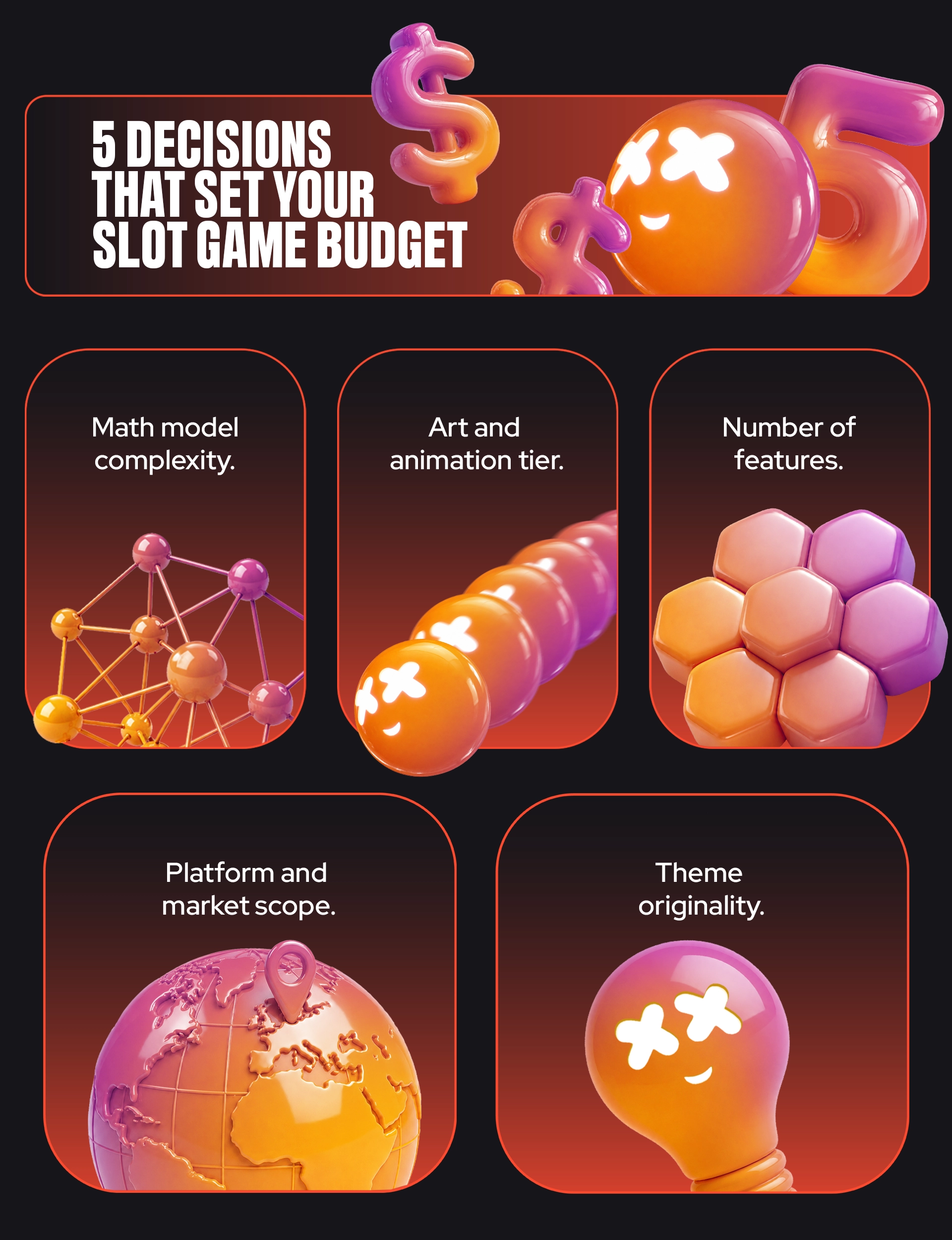
The gap comes down to five decisions: how original the math model is, how much custom art and animation the game needs, how many features it ships with, how many platforms and markets it launches on, and how distinctive the theme has to feel. Each one moves the budget in a different direction, and how you combine them determines where your project lands.
This article walks through each of those five drivers one by one, shows how they stack up across three project profiles: a classic, a mid-market hit, and a premium branded slot, and ends with what to put in a brief so a studio can quote you accurately on the first try.
Slot game design in 2026 costs vary widely depending on scope. Simple classics land at the low end. Branded titles with custom art, bonus mechanics, and animation reach the high end. Most project operators land somewhere in the middle of that range.
The range is wide because “a slot game” can mean very different things. A basic clone and an original branded title are completely different scopes, even if they look similar on a brief. Most quotes also don’t separate design cost from full development cost; engine build, certification, and server setup add a meaningful amount on top. The global gambling market has grown consistently, and studio rates have followed.
All ranges discussed here reflect general category norms, not specific studio quotes.
Driver #1: Math Model Complexity
Math is the highest hidden cost on most slot projects. A standard model is relatively affordable to design and audit. A custom mechanic like Megaways or Cluster Pays pushes that cost up considerably, with a longer audit process on top.
Where you land depends on how original your mechanic needs to be. If your game can run on a proven reel structure, you stay toward the lower end. If you want something players haven’t seen before, you’re commissioning original math work, and that takes time to design, simulate, and get approved.
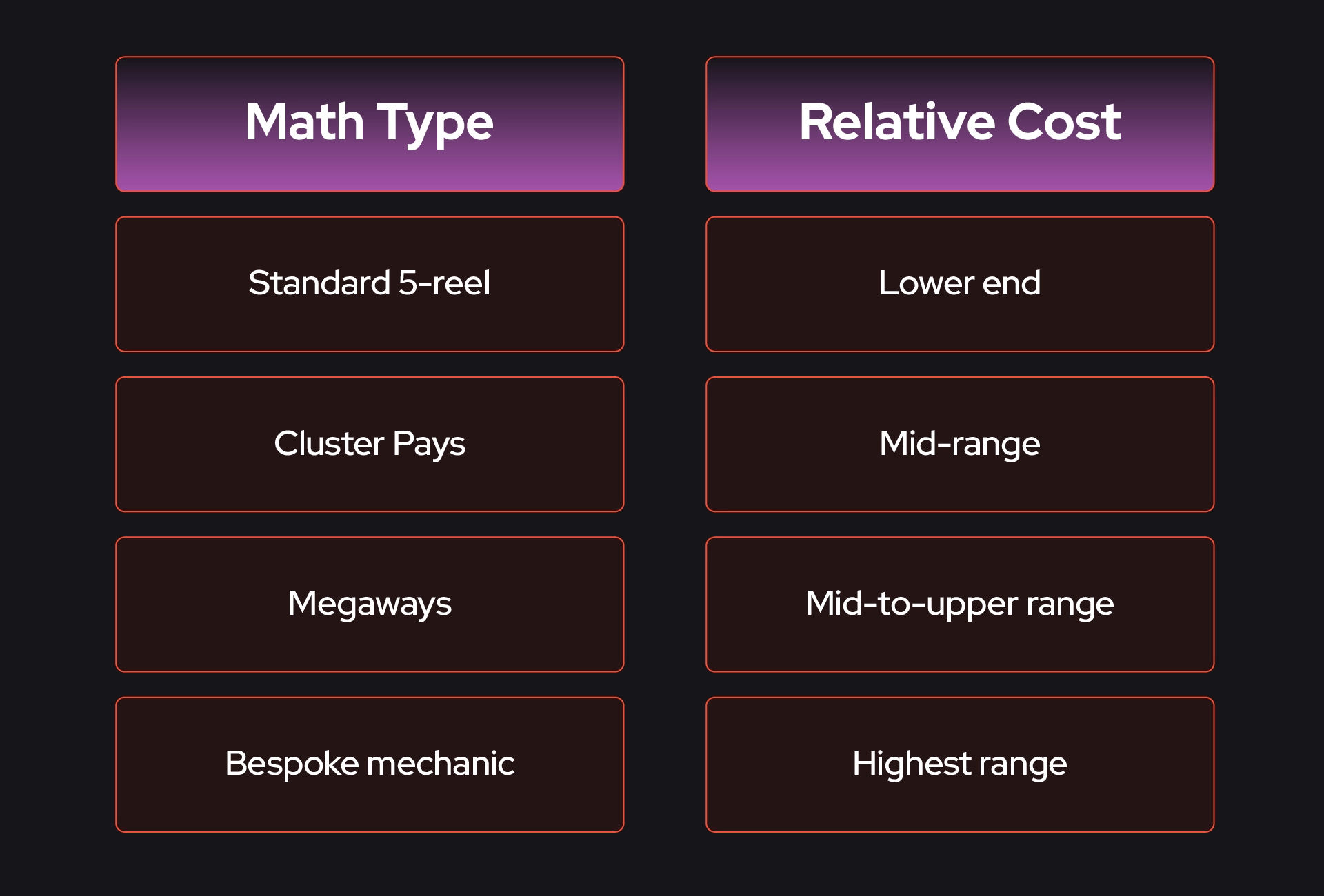
A custom mechanic isn’t a small spec change. It’s a multi-week project that goes through design, simulation, and independent audit before art even begins.
Art and animation typically make up the largest single share of total slot design cost. Stock-style 2D sits at the lower end. Custom 2D with character animation runs considerably higher. Full 3D with cinematic sequences sits at the top of the range.
What moves you up the range is how much original creative work the game needs. A generic theme with existing visual references is faster to produce. A distinctive world with original characters, custom reel frames, and animated bonus sequences is a much larger creative output. The more the game needs to feel like its own thing visually, the higher this line item goes.
What the animation budget covers:
- Symbol animations
- Big-win sequences
- Bonus-round transitions
- Character reactions
Most budget overruns happen in art, not engineering. Big-win and bonus sequences matter most for casino retention.
Each major feature adds a meaningful chunk to the budget, since every feature is its own design, math, casino UI, and animation track.
What determines cost here is how many features you ship and how complex each one is. A single free-spins round is straightforward. A multi-tier bonus with its own mini-game, separate math model, and custom animations is a project within a project. Features also interact with each other, and those interactions take extra design time to get right.
Common feature costs:
- Buy-bonus option — Lower cost
- Free spins — Lower-to-mid cost
- Hold-and-spin — Mid cost
- Bonus mini-game — Mid-to-upper cost
- Progressive jackpot — Upper cost
Most high-performing slots ship with one or two features done well, not four done quickly.
Platform scope adds a meaningful percentage to your budget. Mobile-only is cheapest; mobile plus desktop is the standard. Each screen size and orientation needs its own UI layout.
The cost here depends on how many versions of the game you actually need at launch. A single-market mobile title is a contained scope. A game going live across several jurisdictions, in multiple languages, optimized for low-end Android devices, is a significantly larger design and QA effort, even if the core game is identical.
Factors that add to platform cost:
- Portrait and landscape support
- Low-end Android optimization
- Localization across multiple languages
Regulatory requirements vary significantly by jurisdiction and affect how much localization work each market actually requires.
A generic theme has existing references and a faster turnaround. An original branded theme needs concept rounds, creative alignment, and more iterations. That difference adds a noticeable premium to the budget.
What drives this cost is how much creative direction needs to be established from scratch. A fruit slot has a known visual language. An original operator-branded world needs its own rules: color palette, character style, UI tone, sound direction. The more the game needs to feel like a brand rather than a category, the more rounds it takes to get there.
- Generic theme: quick to produce, harder to stand out with
- Original unbranded theme: distinctive without IP costs, usually the smartest middle ground
- Licensed or operator-branded IP: adds a noticeable premium on top of any licensing fee
A clear creative direction before production starts saves revision rounds later. It’s also where iGaming branding work and game design overlap most directly.
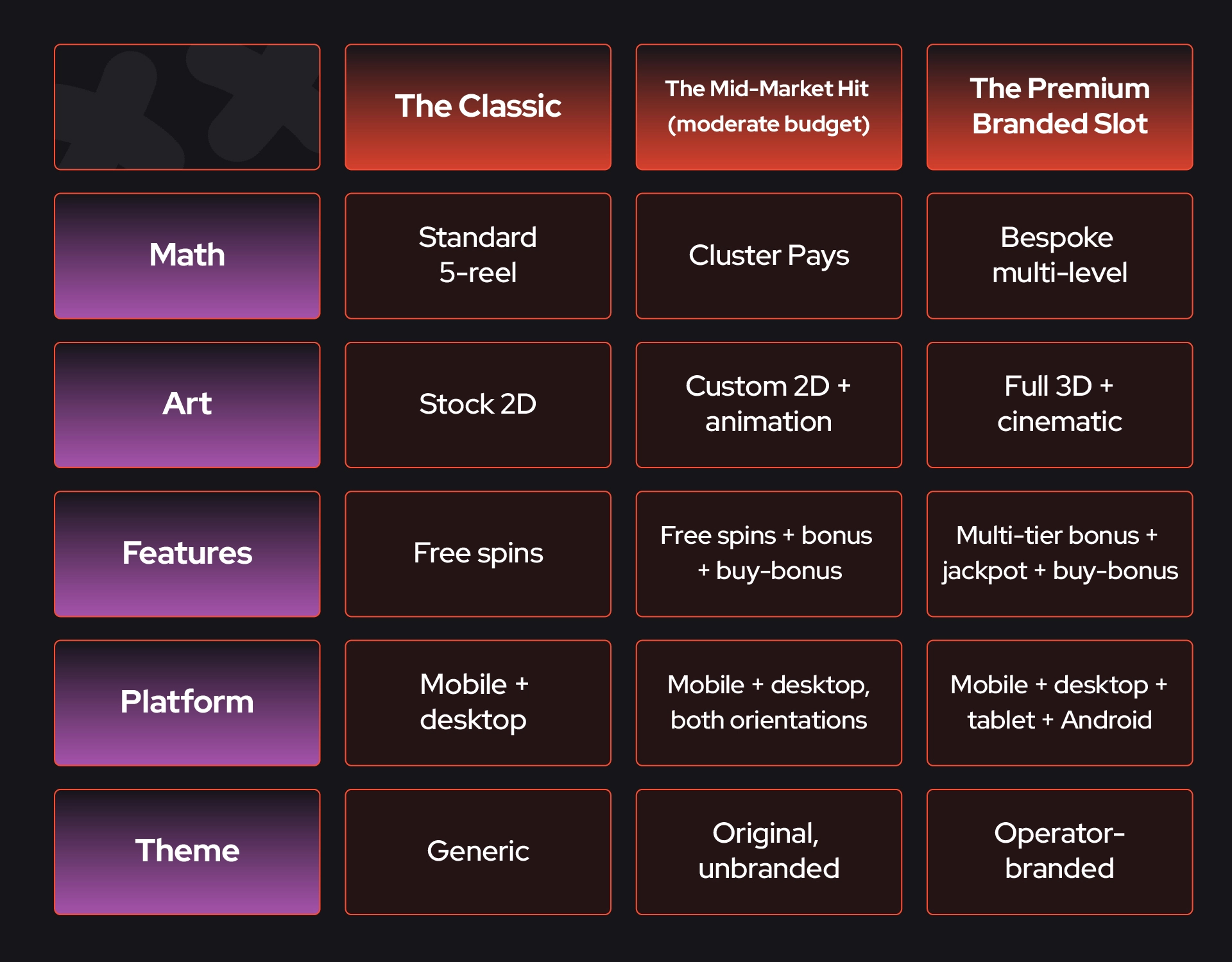
Three Project Profiles
Three slot projects at different relative budget levels, built from the five drivers above.
What’s Not in the Design Budget
Online casino design is one part of the total project cost. It doesn’t include:
- Game engine and client build
- Certification and RNG audit
- Server infrastructure
- Marketing and launch
- Post-launch updates and live-ops
Design cost is typically a meaningful but partial share of the full project budget, so it’s worth budgeting well beyond the design line item alone for a realistic all-in number.
Unclear scope is the most expensive thing on a slot project. A written brief before you approach studios saves real money down the line because revision rounds drop.
Five things every brief needs:
- Math direction: standard or custom
- Platforms: mobile-only, mobile plus desktop, or wider
- Feature shortlist: two or three ranked priorities, not a wishlist
- Theme direction: generic, original, or branded
- Target market: jurisdiction shapes compliance scope
Studios that quote clearly are usually the ones that have done this before. A quote without a line-item breakdown or a named math designer is worth questioning before you sign.
Scoping a slot project? The BetBoyz team writes detailed, line-itemed quotes, usually within 48 hours of a written brief. Send what you have, and we’ll come back with a real number.
Bring your game ideas to life with Betboyz. Our creative team designs engaging, visually stunning games tailored to captivate your audience.
Slot game design doesn’t have a fixed price because it doesn’t have a fixed scope. The five drivers above are what actually move the number, and understanding them puts you in a much better position when vendor quotes start coming in.
Know your math direction, lock your feature shortlist, and have a theme in mind before you brief anyone. That alone cuts the back-and-forth significantly.
When you’re ready to put numbers to your specific build, the BetBoyz team works from written briefs and comes back with a real, line-itemed range.